

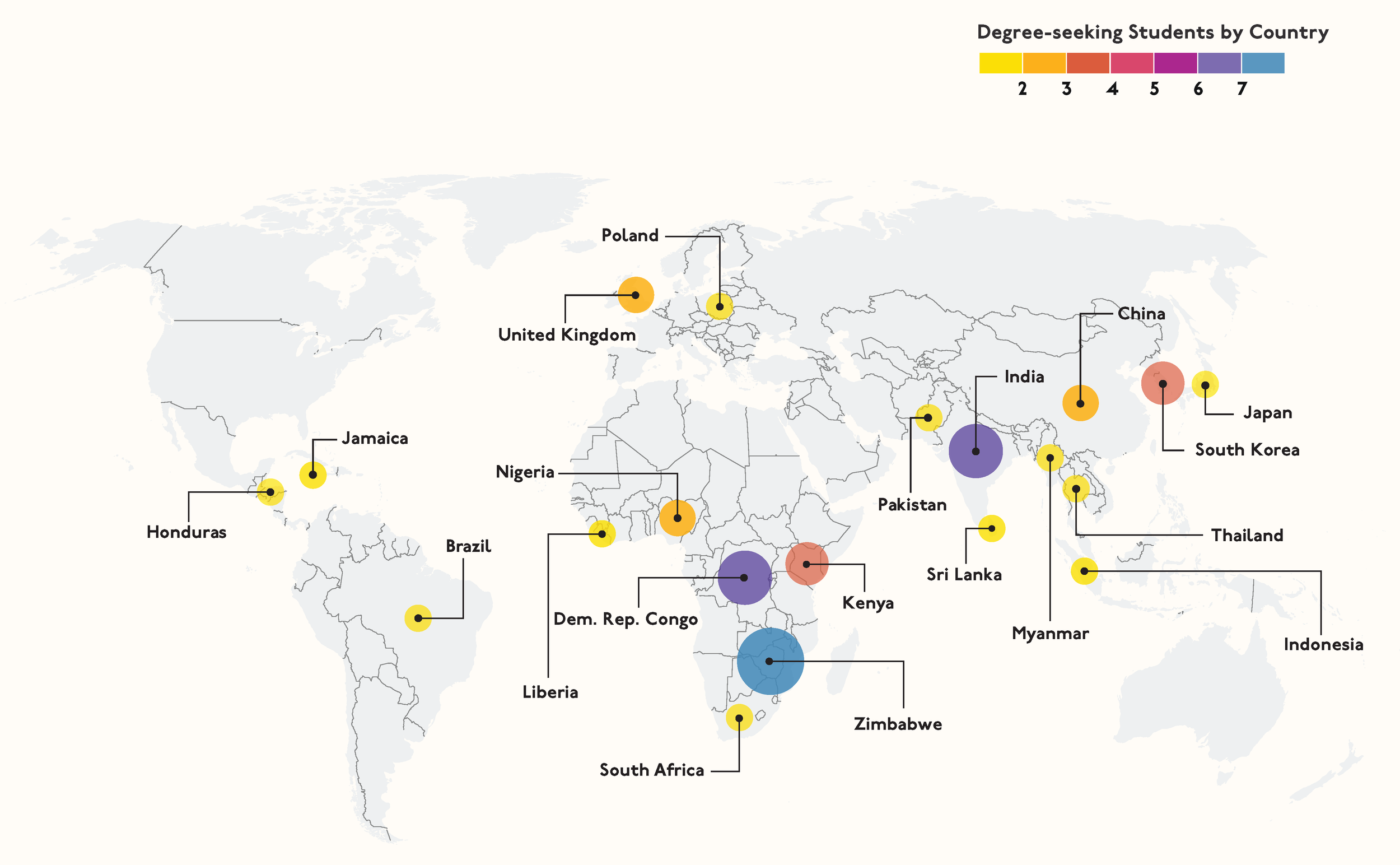
Informed Locally, Formed Globally
How global hubs create an academic culture that’s wide and deep.
The growth of Garrett’s global hubs represents a unique collaboration between faculty and administration. Often, higher education strategic plans are dictated by enrollment pressures and economic motivators. Garrett's process flipped this on its head. Faculty heard a fervent desire for theological education echoing across the globe. (A call that’s easier to hear when professors hail from 10+ countries.) In response, they changed pedagogy and curricula, trained in new modalities, and designed hybrid degree programs that enable students to answer their call wherever they live. Now, prospective students are eager to join an institution that reflects the global church. Aware asked President Javier A. Viera and Academic Dean Jennifer Harvey to discuss these developments, what is thriving, and the resources Garrett needs to maintain and expand this exciting progress. A transcript is printed below, edited for length and clarity.
Javier Viera (JV): As you lead Garrett’s faculty, what developments in our global hub work bring you the most joy?
Jennifer Harvey (JH): I am so pleased to be at the stage of our Africa University (AU) partnership where we are experiencing concrete curricular offerings. Relationships and networks between our faculties and staffs continue to emerge, but how exciting to have completed a full course last summer that offered in-person formation for Garrett students who are primarily remote learners, taught by Garrett faculty in Mutare, Zimbabwe.
JV: I love hearing that. When I spoke with Kenneth and Thehil (Dr. Kenneth Ngwa, Professor of Hebrew Bible and African Biblical Hermeneutics, and Thehil Russelliah Singh, Dean of Students) this fall, what struck me was that neither described the experience simply as taking a Garrett course to another location. They talked about the relationships that formed when students, faculty, and administrators were together—learning, eating, worshipping, and building community. That matters because theological education is ultimately formational—we aren’t simply transmitting knowledge.
JH: We’ve received a great deal of feedback that students shared that assessment. It mattered that they had an opportunity to gather as colleagues across the African continent. They took Hebrew Bible with Kenneth and engaged in community building with Thehil—breaking bread and learning side-by-side. Students loved it. Now, Mai-Anh (Dr. Mai-Anh Le Tran, Associate Professor of Religious Education and Practical Theology) is teaching at AU this fall. She is deepening relationships with AU faculty and working to identify ways we can strengthen contextual education for African students. What’s most exciting for you, Javier, as you work to expand these kinds of partnerships?
JV: Spanish-language theological education is especially close to my heart, both personally and vocationally. So, I’m tremendously excited about our new partnership with Bíblica Virtual (BV) (an Argentinian-based institution that specializes in remote instruction across Latin America) and the work emerging alongside our own Centro Raíces Latinas. Their first collaboration launched this fall, a Diplomado en Pastoral Social on the Garrett Collective. It’s a six-course certificate program, and they have 60+ students enrolled!
JH: Amazing. Spanish-speaking members of our faculty keep telling me that it seems we have real momentum to live more fully into this part of Garrett’s mission. We’re preparing to offer master's level courses in Spanish in 2027, with eyes toward a complete Spanish-language Master of Theological Studies, developed under Nancy’s guidance. (Dr. Nancy Bedford, Georgia Harkness Professor of Theology). As we think about the Abundant Spirit campaign, this is exactly the kind of growth we need to fund.
JV: Exactly. This is where I think we need to be clear what we mean by becoming more global. We aren’t interested in exporting Garrett to other parts of the world, as though knowledge creating takes place in Evanston and our task is then to simply distribute it more broadly. Reciprocity is at the heart of this work. So, when we talk about the possibility of an MTS serving Spanish-language learners, we’re asking what that degree and its curriculum might become when it is shaped alongside Latin American theologians, historians, biblical scholars, pastors, and communities.
JH: The last part of what you said really needs to be re-emphasized. We understand we’re building programs alongside Latin American scholars and pastors. That said, I don’t want to get too far in the future, because part of what thrills me is what global partnerships already offer Garrett’s classrooms.
JV: I hear this from our students all the time. One thing they value about Garrett is encountering people whose experiences of church, culture, politics, suffering, hope, and even Christianity itself are quite different from their own. I feel that in my own classroom and it changes the questions we ask. What have you seen when you’re teaching?
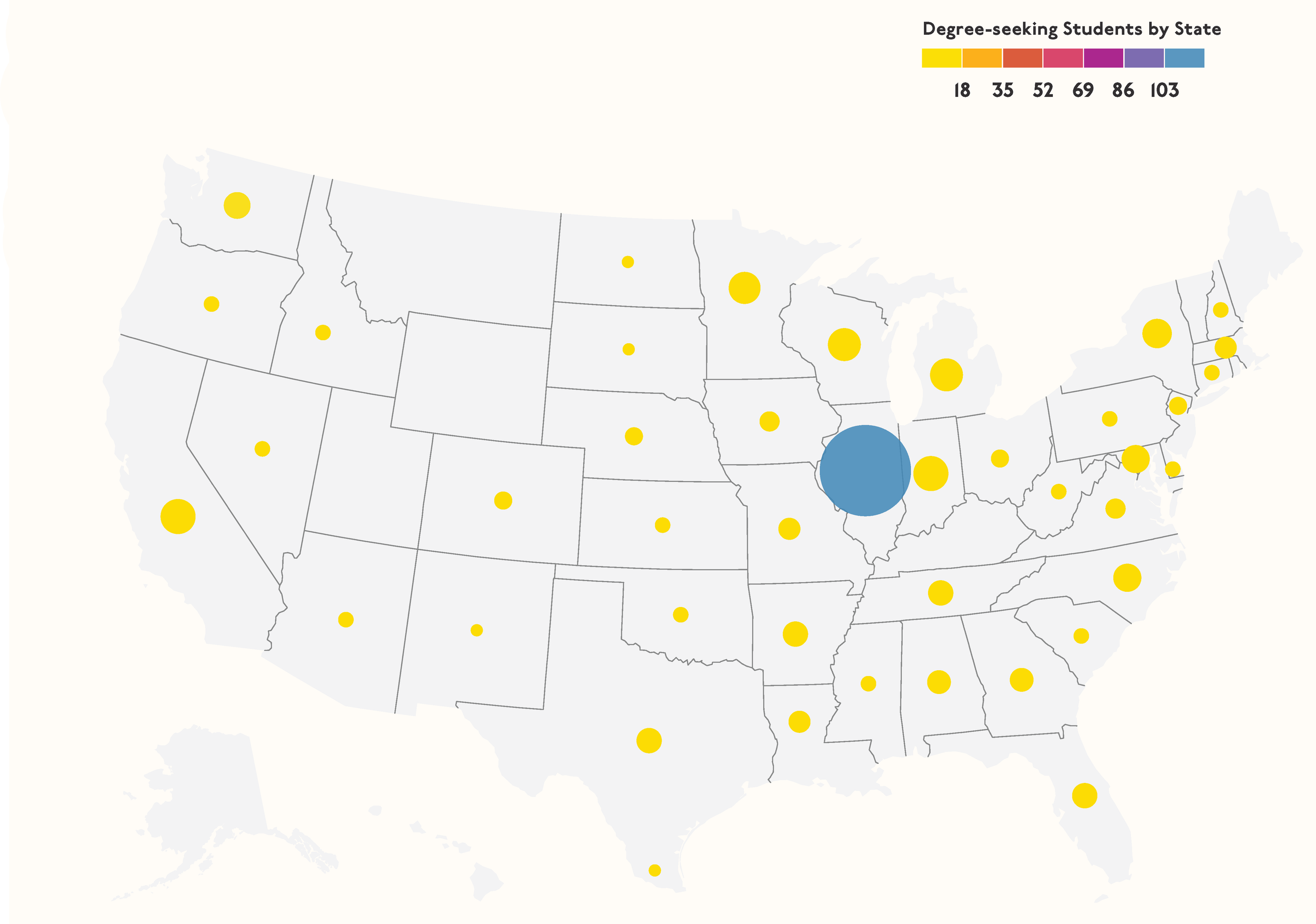
JH: It really is that vibrant. If you’re a student enrolled from Arkansas, engaging the course through your own computer screen, you experience the global church in unprecedented ways. I taught an ethics class this summer, and I learned so much when students talked about justice issues related to women. I’m used to these communal conversations grounded in U.S.-based 1st, 2nd, 3rd wave feminist movements—it was totally different to watch students wrestle with what those commitments mean across starkly different cultural contexts, articulated by the people who are living them. The love and wisdom shared in that space was so beautiful, I actually struggle to put it into words.
JV: What I find even more powerful is what happens by the time they’re finished with a degree. We’re offering formation, not just access. Access matters enormously, but the deeper promise is that Garrett graduates will encounter difference with theological depth, humility, curiosity, and confidence. That’s essential preparation for ministry.
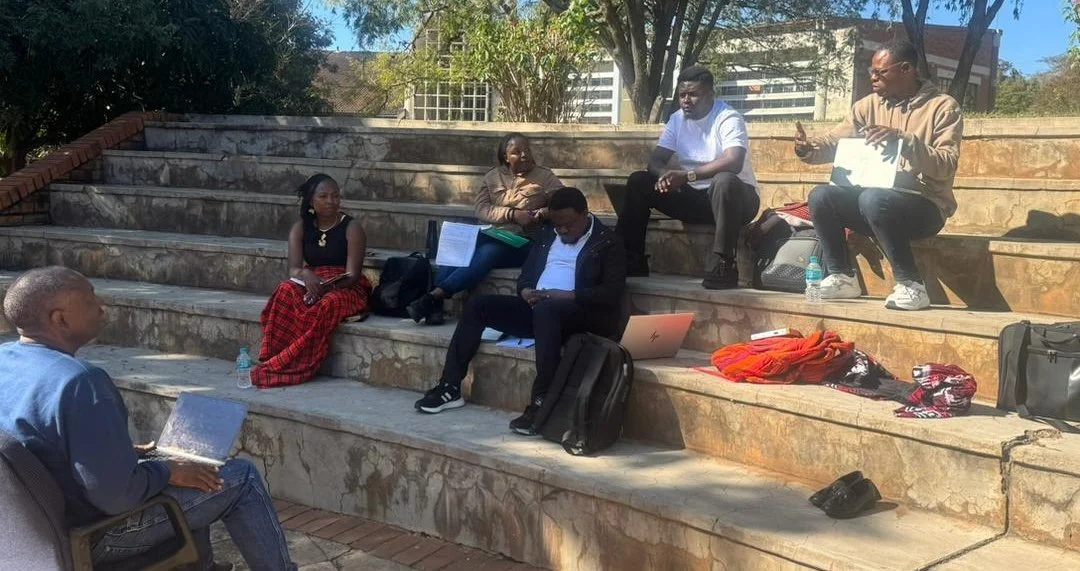
Dr. Kenneth Ngwa teaches a Hebrew Bible intensive at Africa University
JH: Yes. You know, that makes me think about the sermon on joy you preached in chapel to start the semester. The text was the Israelites grumbling about hunger, and I loved how you named the way this story calls us to focus on generosity and gratitude even amid overwhelming circumstances. Of course, this wasn’t a simplistic call. I heard your clarity in naming our broader circumstances—we can’t pretend there isn’t hunger, we shouldn’t suggest conditions are “fair.” But, I also heard you challenge us: that if we stay mired in negativity, we’ll miss how God bestows abundance when there is need. We can just be angry about moving classes online when students are barred from entering the country—to focus primarily on remote education’s challenges—or we can open ourselves to building and supporting community so harm and violence do not dictate who we are.
JV: Yes. What I love about that story is that God’s abundance appears in the wilderness. The wilderness doesn’t disappear. Hunger is real. Uncertainty is real. But those conditions do not exhaust what is possible. God can’t prevent every calamity. But God can and does enter those crucifying realities with generosity that makes another day possible. That’s the abundant spirit we need to embrace. For me, abundance is not optimism. It’s a theological claim that God is already at work in ways we may not yet know how to see, that faithful institutions can learn to recognize that activity and participate in it. As we engage that work, it is a posture of joy and hope that will sustain us.
JH: The image that comes to mind is how you can have asphalt everywhere, and flowers will still grow through the cracks. That’s what this global classroom offers—love and beauty erupting through places that, at first glance, may seem to have been deadened by powerful forces. Hundreds of communities where our students live out relational, joy-filled, justice-tending care as they learn—whatever the future looks like. Obviously, I hope the future also features governments who lead from a place of justice and flourishing, but what’s happening in these classrooms makes me know without a doubt: There will be flowers everywhere.
JV: That’s a beautiful vision. And it raises the institutional question for me: What must we build to sustain it? Because vision without infrastructure doesn’t remain a vibrant vision for long. If we want these relationships to become a durable part of Garrett’s educational distinctiveness rather than wonderful experiments, we have to invest boldly and generously.
JH: The biggest need I see is expanding our institutional capacity from an educational model that deploys resources in one location, to the interconnected model we’re now living. We need a travel budget so U.S.-based faculty and staff can have a regular international presence. We must help subsidize travel for students who want to join intensive courses like the one we offered in Zimbabwe. We had much more interest in that class Kenneth taught that we spoke of earlier, but financial realities prohibited many students in other parts of the continent from making the trip.
If more students remotely engage our classrooms, how can we work with local partners to ensure reliable internet access? That takes resources. We need staff and faculty for whom multilinguality is normal, and we need technologies that enable those of us who are monolingual—like myself—to seamlessly translate. That takes resources. What are you hearing from other parts of the institution?
JV: One need is developing contextual education sites. Here in the U.S., field education is relatively simple because church structures are strong and we have networks with denominations. In other contexts, it's more difficult. We can’t simply ask, “How do we fit this student into our existing field education system?” We need to ask: "What does excellent contextual formation look like there? Who knows that community? How can we make sure clinical hours meet the requirements for mental health licensure in other countries, and build relationships with site supervisors there? Because field education is such a crucial part of seminary formation, some of this work must happen on the front end. If we enroll a student from a different part of the African continent, how can we identify a ministry partner? That kind of granular relationship-building takes resources, but it’s essential for students to feel like we’ve done right by them.
JH: Exactly. And this ties into the ways we’re trying to bring a decolonial ethic into these partnerships. Historically, U.S. institutions were built on the understanding that “we do education here, and everybody else will come.” That's not only a kind of cultural hegemony, but it’s also intertwined with histories of imperialism and oppression. The model we are living into—which we know will take years—is a material, educational, and spiritual inversion. It can’t be “Here at Garrett in Evanston, Illinois, we have all the answers.” We need to invest in scholars, activists, ministers, and churches who already have many answers and with whom we are going to build, share resources, and grow. It’s one thing to have a philosophical commitment to decoloniality, it’s another thing to structure that in the budget.
JV: I think that’s exactly right. For me, decoloniality becomes meaningful when it moves from rhetoric and aspiration into institutional practice. It changes who shapes the curriculum. It changes where resources go and what is prioritized. But I also want us to resist creating another false binary here. Garrett becoming more globally engaged does not mean becoming less rooted in Evanston, less committed to residential theological education, or less attentive to U.S. churches and communities. In fact, I think the opposite can be true.
Our residential community becomes richer when it’s more deeply woven with scholars and students from around the world. U.S.-based students receive a more expansive theological education. And our global students benefit from the intellectual, ecclesial, and institutional resources that have been cultivated here over generations.
The vision isn't “Evanston or the world.” It's a Garrett whose different communities are increasingly connected—where formation happens residentially, digitally, and in communities around the world—and each strengthens the others.
So let me ask you: What blessing do you think this model for theological education can bestow?
JH: Education is what helps human beings develop the capacity to interpret our own experiences and to join others for broader understanding, challenge, and growth. It's what frees our minds to imagine that another world is possible—and dares us to co-create that world. Theological education roots those gifts in existential questions about what it means to be human and connects us to the God who magnifies our own agency, while relentlessly calling us to see our interdependence and collectivity. So, what happens when we fully realize this promise we’re already striving to live? I’m telling you, Javier—flowers everywhere.
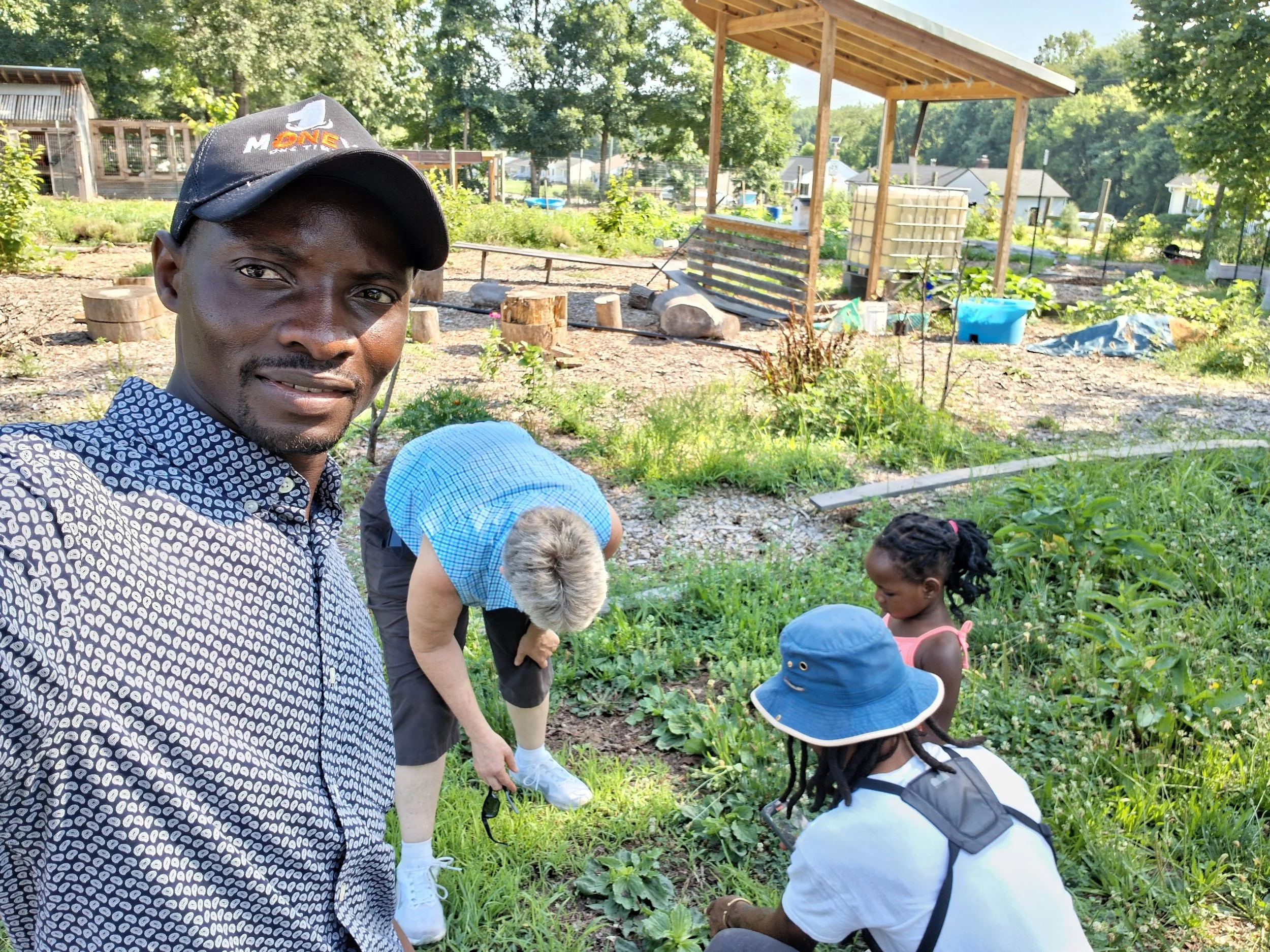
Growing a Different World
Simbarashe Ndowa (MAPM) puts his hands in the soil to nurture God’s just future