

Space for God
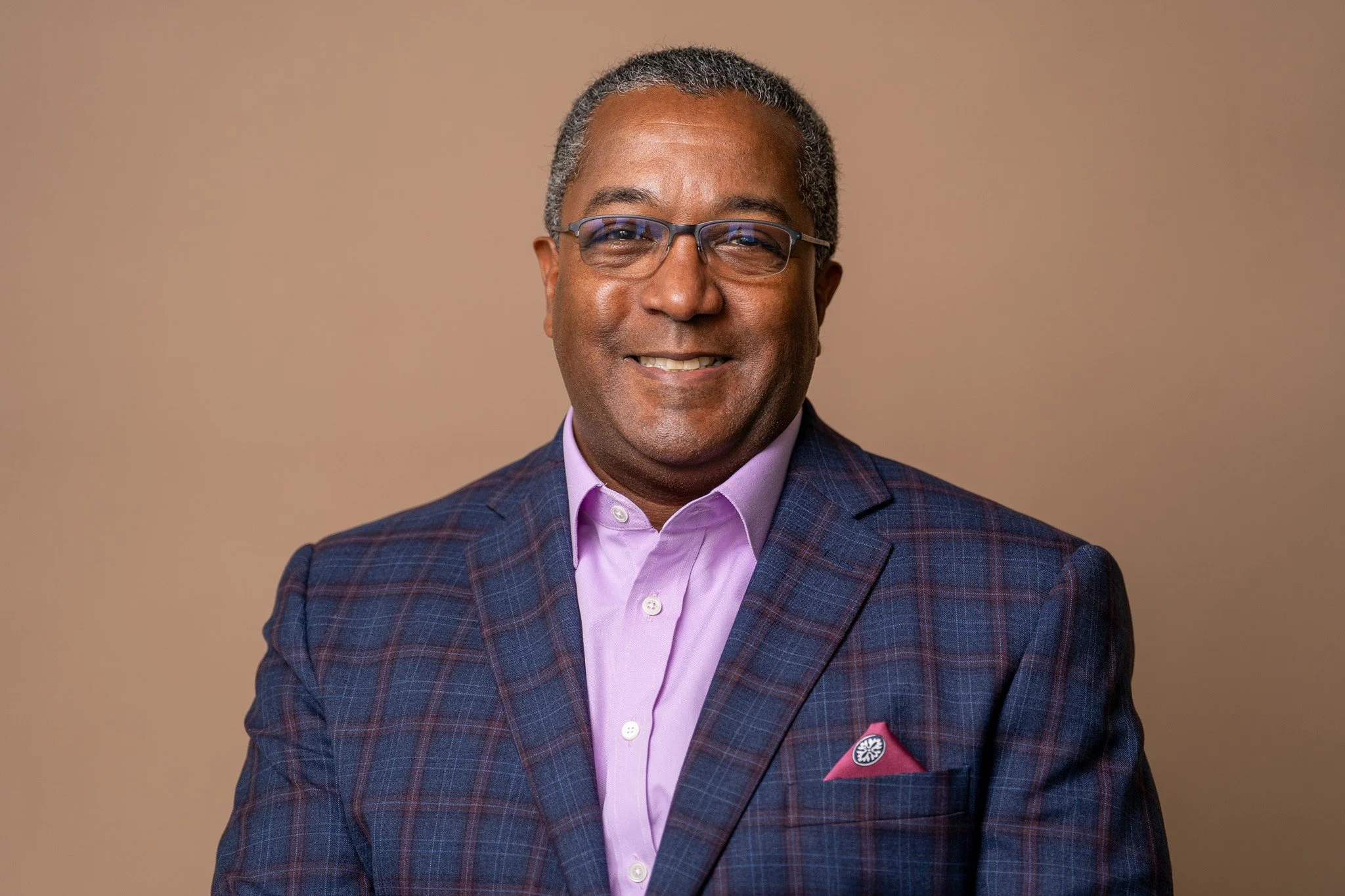
Rev. James Clark III ’07 brings a theological perspective to how churches manage their property. It’s a wisdom he brings to his role on Garrett’s board of trustees as we shape the seminary’s future.
“I try to honor the significance of place, understanding how we carry the legacy of prior generations into whatever the new plan is.” It’s a fitting ethos for someone who helps churches align their physical structures to deepen their community engagement—and who has contributed time and treasure so Garrett can do the same. For Rev. James Clark III (G-ETS ’2007), this is the culmination of a life spent bivocationally in ministry and in commercial real estate. Now the managing director of mission real estate development at Trinity Church NYC, he employs skills garnered from a long business career to guide churches through discernment and renewal. “It’s a mindset that recognizes that the work of a church is beyond its walls,” he explains. “God provides everything we need to follow that call. Once we understand that personally and as a congregation, the responsibility of stewardship is to ask how we can engage our physical resources to serve our mission.”
It's a shift from how many churches have historically considered their physical properties. Oftentimes, the realities of 100+ year-old buildings and the attendant maintenance can leave congregations feeling like their physical space is a burden or liability, even as they cherish its beauty and significance. Church preservation can become a mission unto itself. Without diminishing that challenge, Rev. Clark works with pastors and lay leaders to highlight new possibilities they may not have considered. As he guides churches, he encourages them to think about three categories of space: sacred space reserved for worship and sacraments, missional space dedicated to community engagement, and commercial space that can generate financial sustainability for the church’s mission. Then, they dream ways to reenergize all three. “The reward for me in this work is seeing the new life and hope that church leaders have, when they realize that their property is their endowment,” he says with joy. “When you don’t become bound by the physicality of what you have, but instead see that as community space, it offers a whole new way of approaching things.”
It's a perspective Rev. Clark also brings to his service on Garrett’s board of trustees, as the seminary navigates swiftly changing student needs. “Challenges go beyond the academic to the practical,” he points out. “Half of our student population is hybrid. They’re actively engaged in the real world while they’re doing their seminary training, and we need programs that provide the same level of engagement whether you are a remote or a residential student.” The steps Garrett took to dramatically improve remote education during the past three years have unlocked dramatic new horizons for the institution’s future. “Expanding our centers and institutes, creating new international partnerships—that openness and interaction is key to why Garrett is thriving while so many seminaries are not,” he says. “The issues confronting humanity and the work of the Church are global, so we need the structures that equip church leadership to thrive.”
It's why he’s so excited about Garrett’s forthcoming comprehensive campaign. “The campaign supports our audacious strategic plan that will expand Garrett’s international reach while also attracting the best instructors who will be energized by this learning environment,” Rev. Clark says, growing animated. “It will help birth programs that show the connection between creation care or other social justice concerns and the deep work of theology.” By strengthening the institutional foundation upon which all these new developments are built, the campaign will also ensure this work is sustainable for decades to come. “I give to Garrett because of how Garrett has prepared me and shaped my ministry,” he explains, “but also because Garrett has the vision, plan, and leadership to take theological education and praxis to new levels and contexts needed for the future.”
That commitment to longevity and paying forward the blessings you’ve inherited is something Rev. Clark learned from his dad, Bishop James Clark Jr. who, at age 90, is still pastoring a congregation. As a child, he watched his dad navigate the challenges of attending seminary while also working and balancing family life. To honor that gift, he has endowed a scholarship in his father’s name to make a Garrett education more affordable for students who are also juggling studies and family commitments. “It’s incredibly demanding—not just on your time but on your finances,” he says. “I didn’t know how I was going to support my family when I started Garrett, but there were scholarships to get me started. I want to be a resource to help anyone else who wants to follow God’s calling and still honor the obligations to their family.”
More than anything, it’s the interplay between the sacred and secular that Rev. Clark values most about Garrett’s approach to theological education. “You can be so consumed in conceptual thinking that you lose sight of the practical—so heavenly minded that you’re no earthly good,” he notes with a chuckle. “The way Garrett engages the Church as a purposeful part of its curriculum and instruction ensures that we draw students who are actively engaged as well.” It’s part of what he treasures from his own time as a student. “Seminary has a way of deconstructing you, but the challenge is to leave reconstructed,” he reflects. “I certainly learned the value of critical thinking, but my time at Garrett also made me more confident about what I believe and why, and provided a stronger theological basis for what I do.”
In his current position, Rev. Clark gets to bring those values, and that expertise marrying faith and business acumen, to communities across the country and throughout Africa, Latin America, and the Caribbean. “God has a way of shaping each of us through life—through the things we do, our passions, and our gifts—for an ultimate purpose,” he says. “Seminary has helped me to keep clarity on God’s purpose first and then understand how other things complement and fit into that plan.”

Empowering Impact
The Oikos Institute is helping Black congregations identify the many forms of capital they already possess.